01
Connect
Any sensor, any transport. Onboard what you already run, and Works With CUMULUS partner hardware fills the gaps. New sensor types integrate in as little as a day.
How connecting works →
Coastal ocean intelligence
CUMULUS™ connects the sensors you already have, adds coverage where it’s missing, and turns everything into forecasts and alerts anchored to physical baselines. You own the record.
Ports, towns, growers, and risk teams need the same coastal record. See how each one uses CUMULUS →
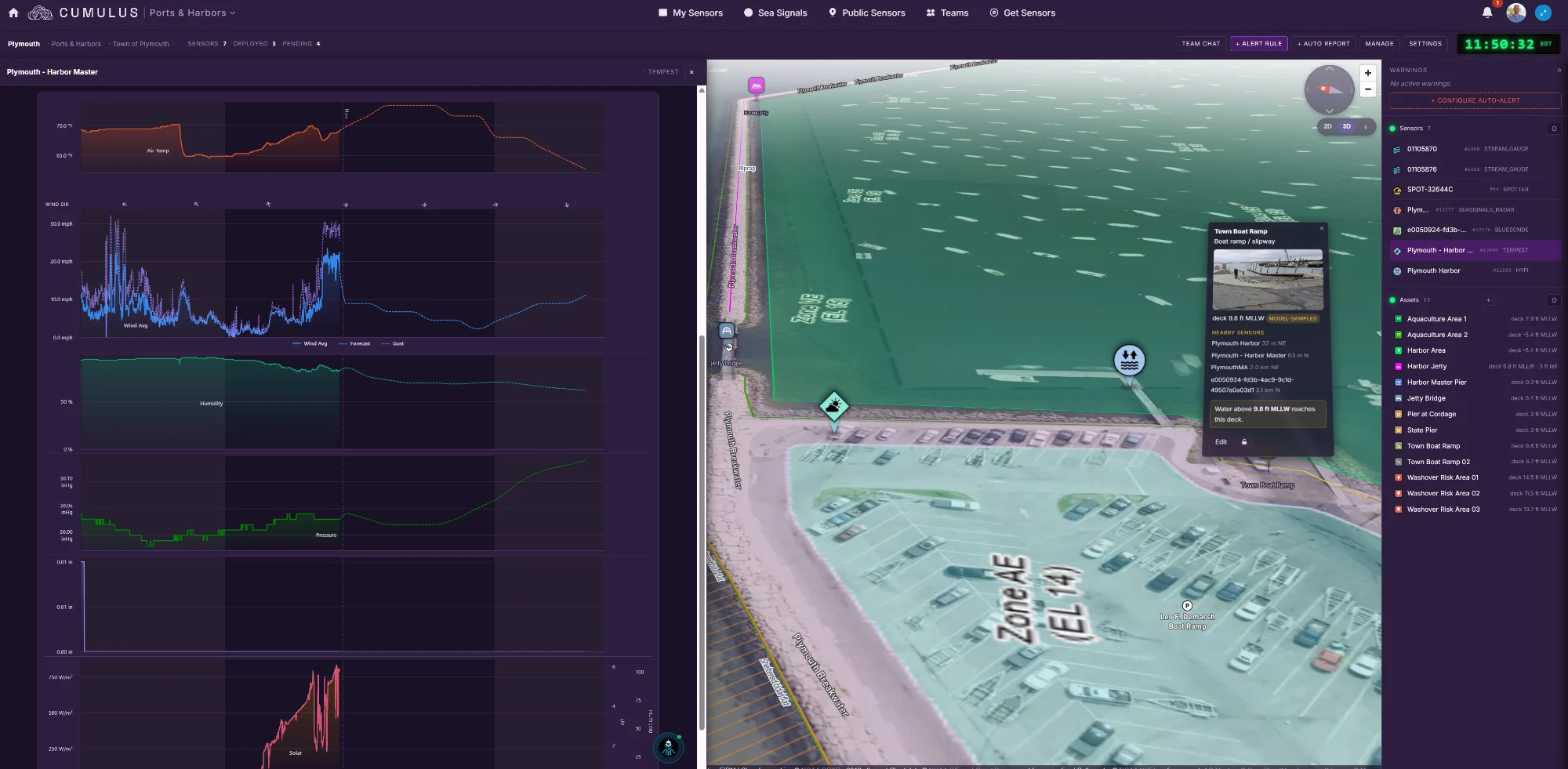 Ports & Harbors
Vessel traffic, wind, water level and waves in one operating picture.
Explore
Ports & Harbors
Vessel traffic, wind, water level and waves in one operating picture.
Explore
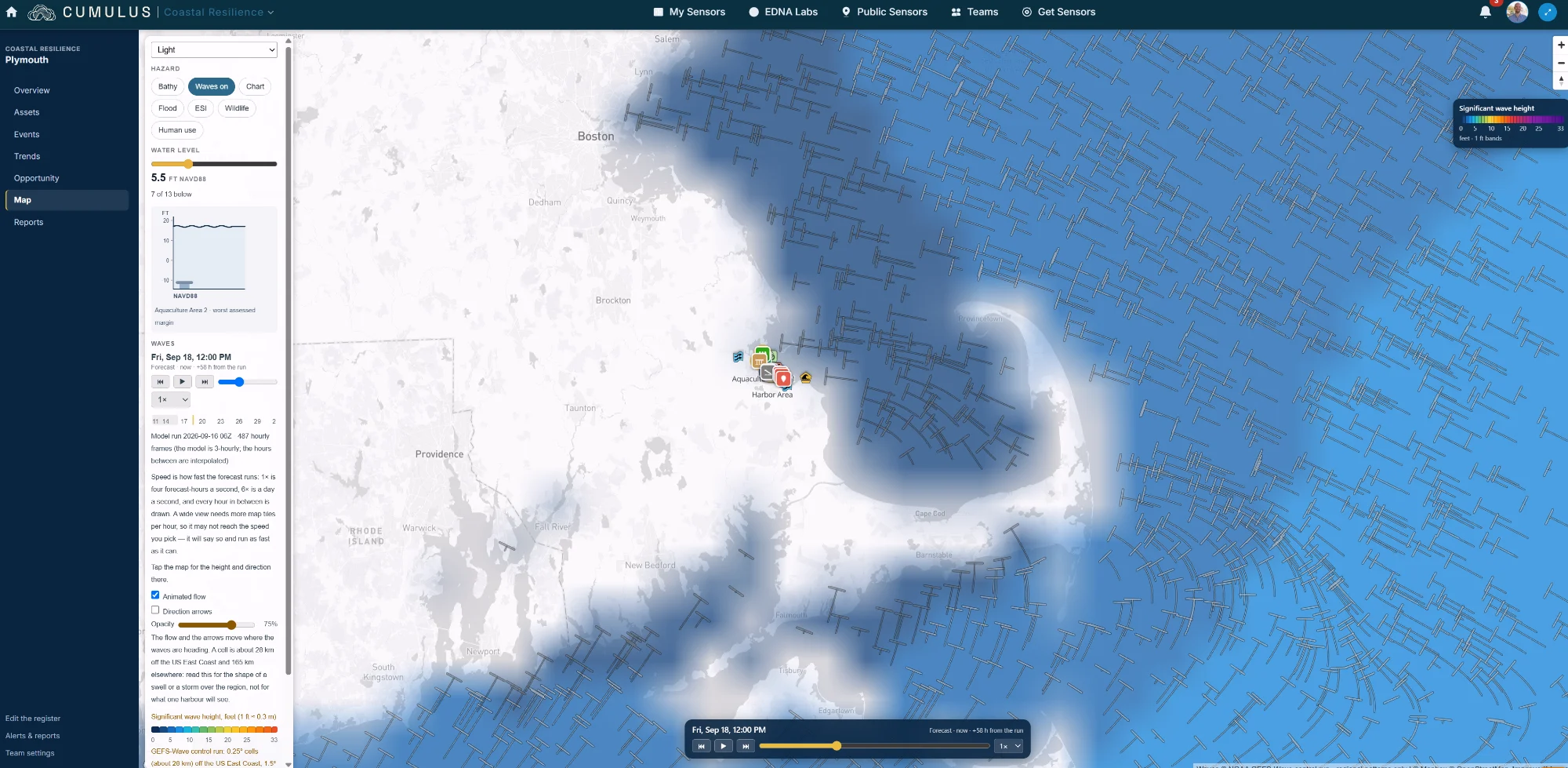 Coastal Resilience
Flooding, overtopping and erosion drivers, tracked as they develop.
Explore
Coastal Resilience
Flooding, overtopping and erosion drivers, tracked as they develop.
Explore
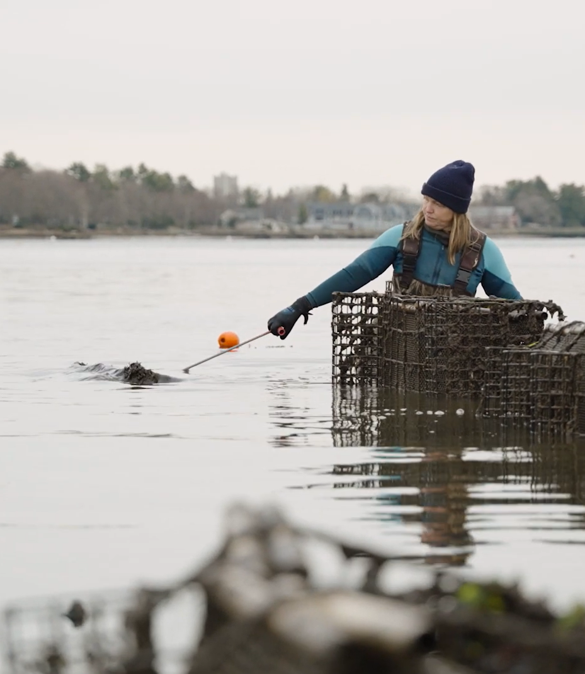 Aquaculture
Water quality, gear stress and advisories for growers and recreation leads.
Explore
Aquaculture
Water quality, gear stress and advisories for growers and recreation leads.
Explore
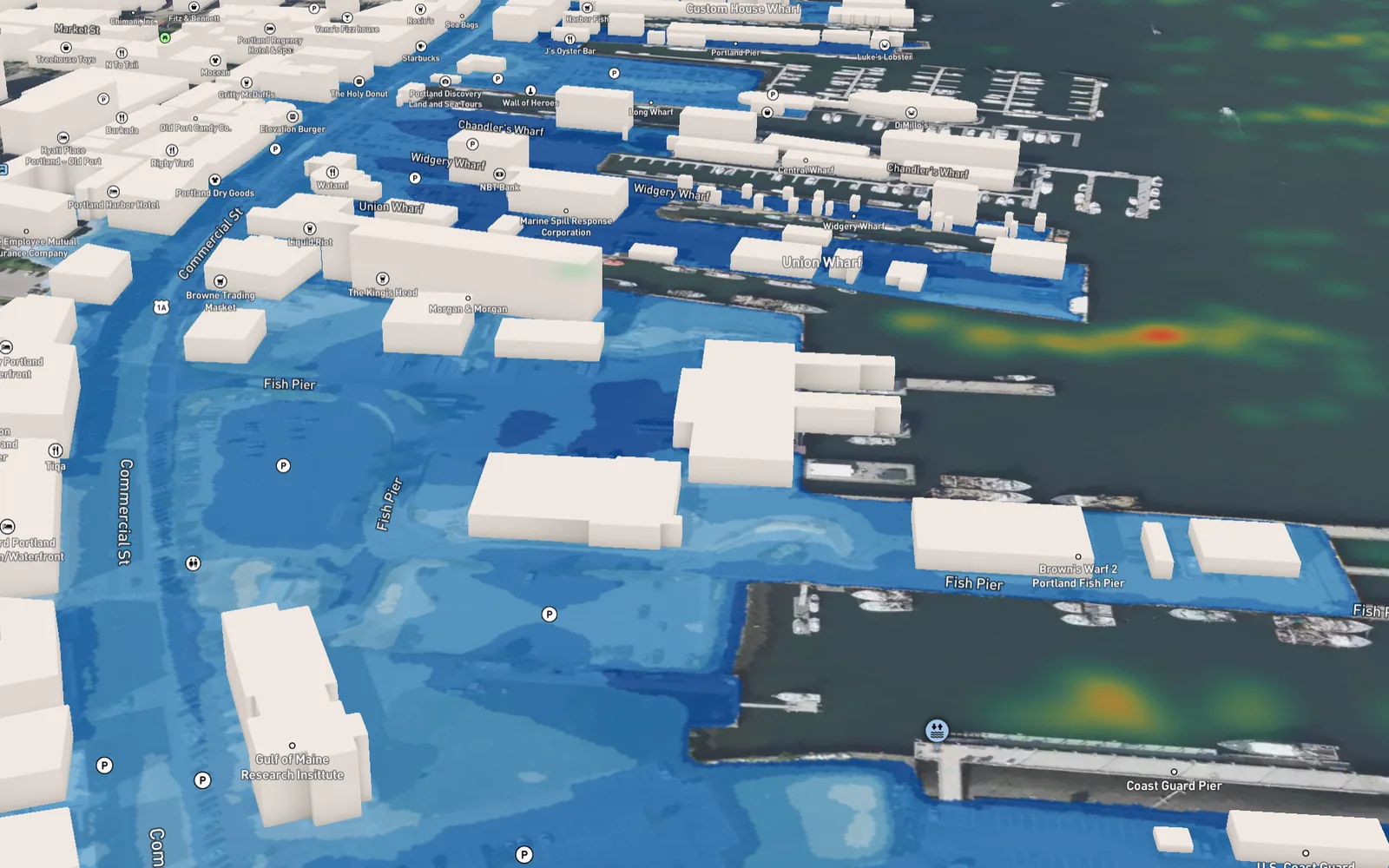 Insurance
The measured record behind a coastal asset, beside the flood zones you already use.
Explore
Insurance
The measured record behind a coastal asset, beside the flood zones you already use.
Explore
observations ingested every day
stations and sensors connected
data points stored and queryable
01
Any sensor, any transport. Onboard what you already run, and Works With CUMULUS partner hardware fills the gaps. New sensor types integrate in as little as a day.
How connecting works →02
Every reading lands in one place, in consistent units, checked on arrival and ready to look at or download. The record stays yours.
How your data is stored →03
Forecasts, alerts, and reports built on those readings, with the data and uncertainty behind every result.
How the analytics work →Analytics with full traceability and stated uncertainty. YSOK, the in-platform analyst, works directly on your CUMULUS data alongside NOAA ERDDAP and Landsat to produce automated reports.
Example
“When did onshore wind and heavy rain line up with high water this season?”

YSOK: I compared wind direction, rainfall, and water level against your flood thresholds and found three periods to review. Each includes the map layers, thresholds exceeded, and a summary you can share.
Most teams do not need another dashboard. They need someone to work out what to measure, put the hardware in the water, and leave behind something that keeps working.
Start with the free planner: map your site, place candidate sensors, and see what each one would tell you.
Open the network planner →Our PhD coastal scientists review the plan, close the gaps, and size the network to the questions you actually need answered.
We coordinate installation with our partners, and keep the network running through the seasons that matter.
Everything lands in CUMULUS, which becomes the lasting digital asset the program leaves behind. The record stays yours.
Plymouth and Marshfield have worked with Coastal Measures to deploy multi-modal sensor networks — wind, water level, waves, water quality, nearshore currents, and X-band radar — streamed into CUMULUS so town staff can see flooding, overtopping, and erosion drivers as they develop. The data trail is designed to support resilience planning and grant reporting.
All 10 sensors live.
“The more data we have to support emergency management, that’s the best place we can be in.”
“I think it’s really important to have this data because each farm is so special and unique.”













Contact
Tell us what you monitor today and where the gaps are.
01 · Connect
Live feeds or years of archive, on the same footing.
Works With CUMULUS
Domain awareness
 Waves and moorings
Weather
Water quality
Water level
Waves and moorings
Weather
Water quality
Water level
 Currents
Public networks




Public feeds arrive alongside your own sensors, on the same footing.
02 · Standardize
One record, consistent units, ready to query or hand to a model.
03 · Operationalize
The same record, shaped to what each group decides.